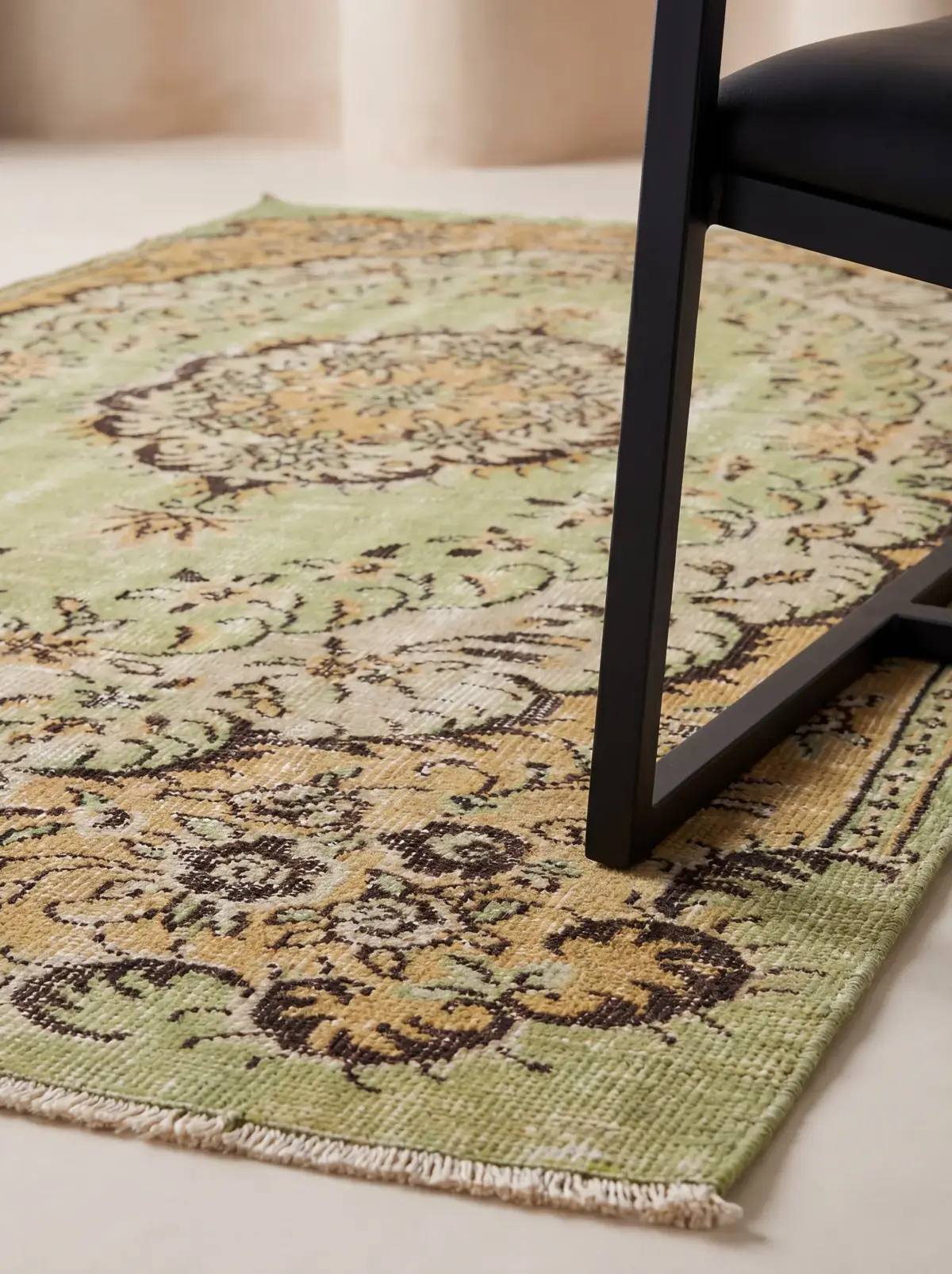
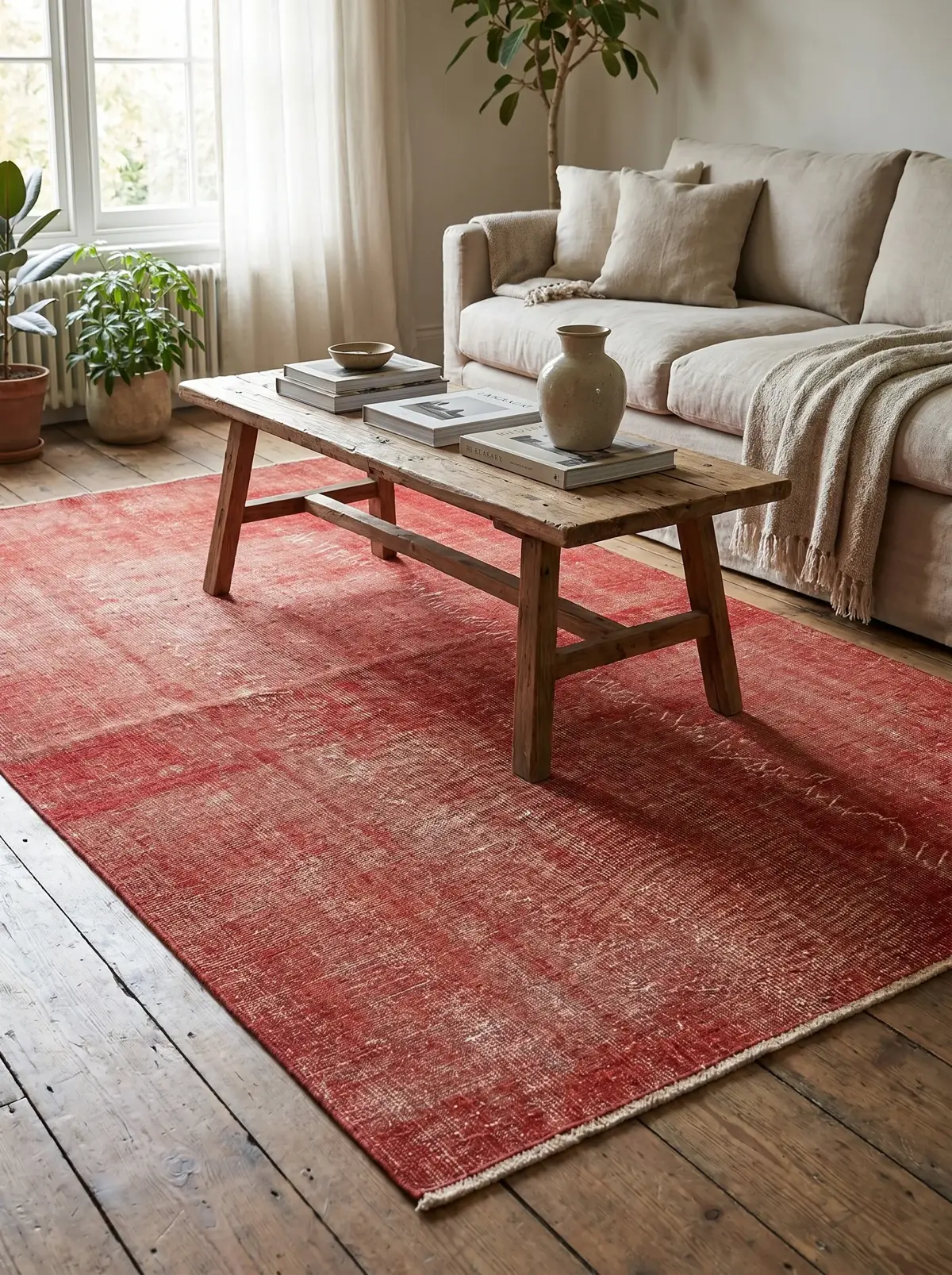


Red Anatolian Medallion Rug
$290$340
−15%You save $50
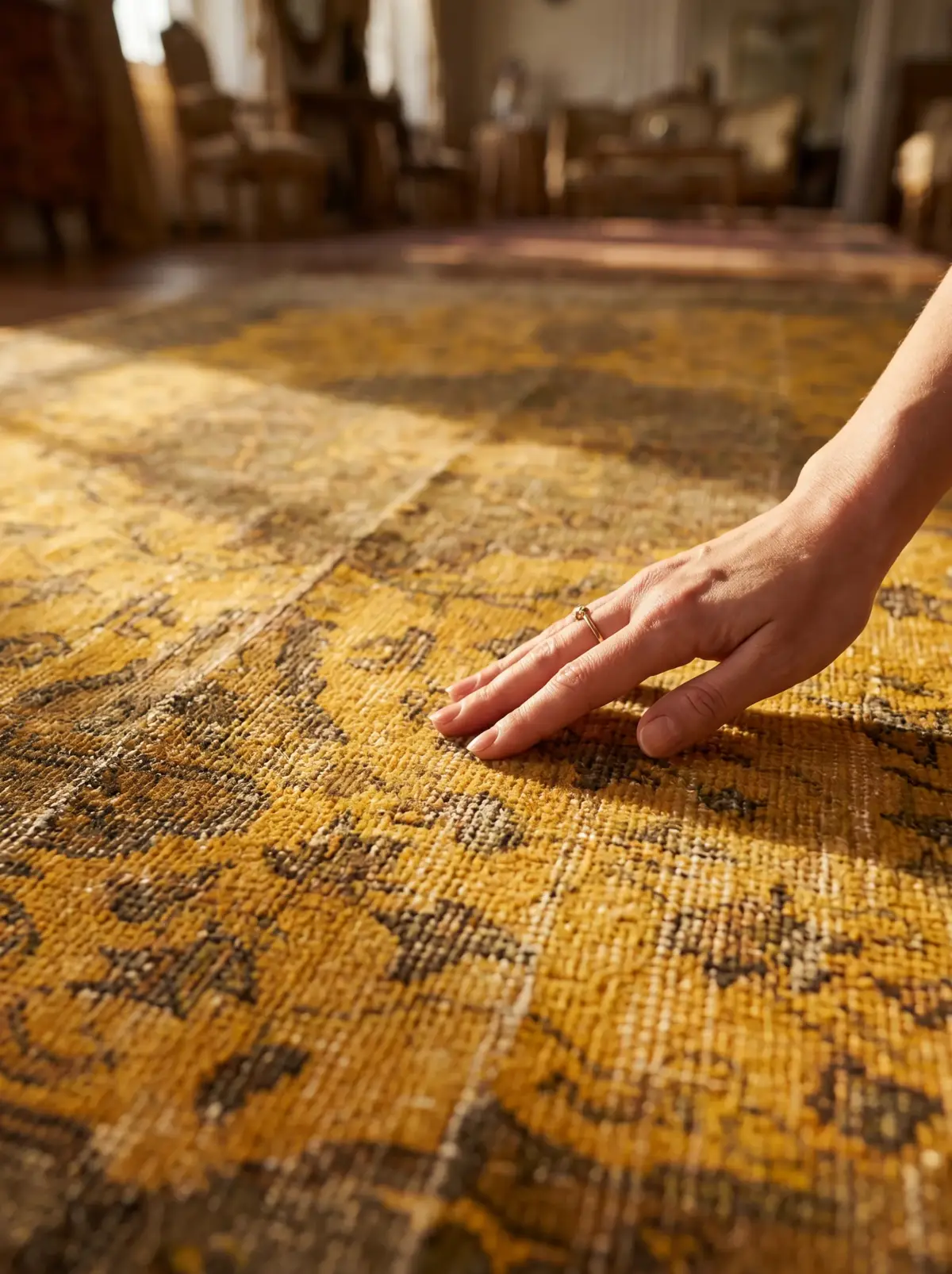
A genuine Turkish vintage rug carries its history in the wool itself — not in a label, but in the uneven fade of indigo, the soft bloom of hand-spun yarn, and the slight asymmetry only a human hand can leave behind.
At Bisāṭim, every piece in our collection is evaluated in the field before it ever reaches Istanbul. We look past surface beauty to the structural evidence beneath: foundation threads, knot density, dye behaviour, and the regional grammar of pattern that tells you where — and often when — a rug was woven.
In our collection, vintage refers to hand-woven Turkish rugs typically between 40 and 120 years old. These are not reproductions styled to look aged; they are working textiles that lived in Anatolian homes, village guest rooms, and merchant storehouses long before they entered the export trade.
The value of age is not nostalgia alone. Time softens harsh synthetics, settles wool into a luminous patina, and reveals the honesty of natural dyes through a phenomenon collectors call abrash — subtle colour variation within a single field of red, blue, or ivory.
Every irregular line is evidence of the loom, not a flaw. In vintage Turkish weaving, perfection was never the goal — presence was.
Turn any rug over and the story becomes legible. A hand-knotted foundation shows individual knots with slight variation in size and tension. Machine-made copies mimic pattern from the front but betray themselves on the back with mechanical uniformity.
An Oushak from Uşak reads differently from a Konya kilim or a Bergama tribal piece. Palette, scale of motif, and border logic all point toward origin. Our sourcing team documents these markers alongside dimensions and condition so each listing in the collection carries context — not just commerce.
When you browse a vintage piece at Bisāṭim, you are not buying a trend. You are inheriting a textile that survived decades of use and still chose to be beautiful. That is the anatomy worth understanding.
Continue reading
Ask about provenance, dimensions, care, or trade sourcing — our team replies within 24 hours, Monday through Saturday.
Response time
Within 24 hours · Mon – Sat
Full contact form, trade inquiries, and personal support on our contact page.
Curated for you
One-of-a-kind vintage pieces from our collection — each with documented provenance and character no new rug can replicate.
Find answers to core details regarding delivery, preservation, returns, and organic sourcing.
Domestic orders within Turkey typically arrive in 3–5 business days. International orders usually take 7–14 business days depending on destination, customs clearance, and local carrier schedules.


